

Cato Institute Fourth of July / America 250 Survey
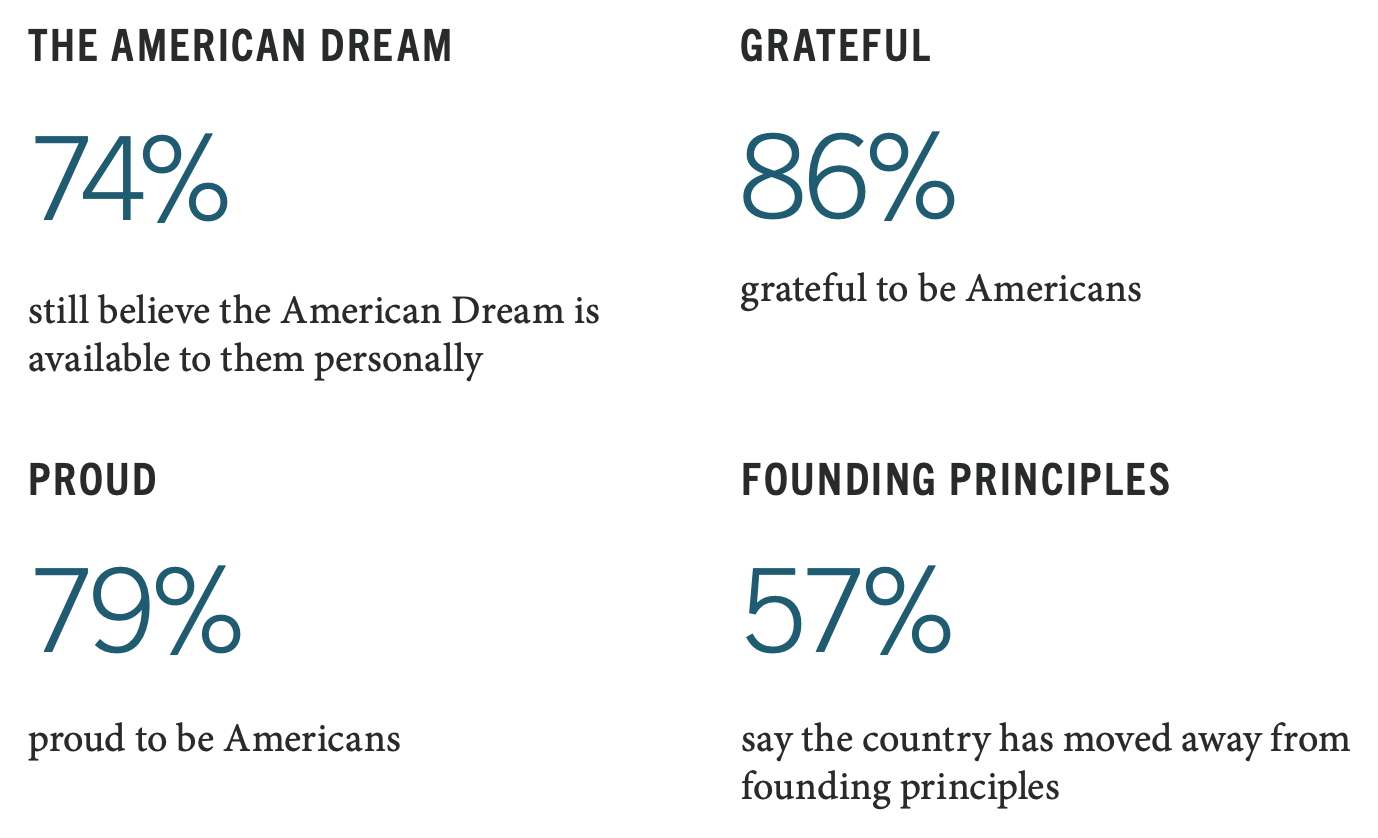
A national survey conducted by the Cato Institute in collaboration with Morning Consult ahead of July 4th and the national celebration of America’s 250th anniversary found that a majority of Americans (74%) still believe the American Dream is available to them personally, but only about half (52%) have a favorable view of capitalism. Notably, views on socialism were evenly split (37% to 37%) between those who see it favorably and those who do not.
Capitalism, Socialism, Communism
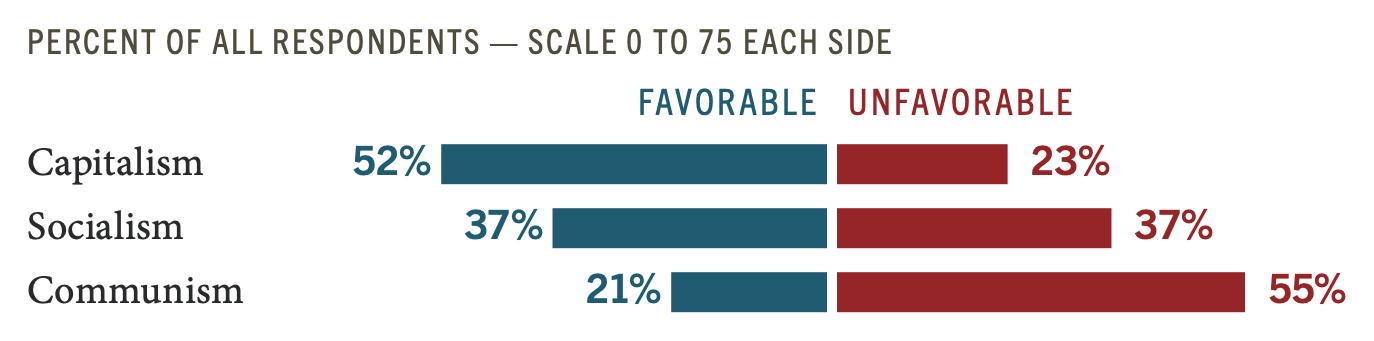
Editor’s note: The remaining respondents (24–26% on each question) said they did not have enough information to say.
View of Capitalism
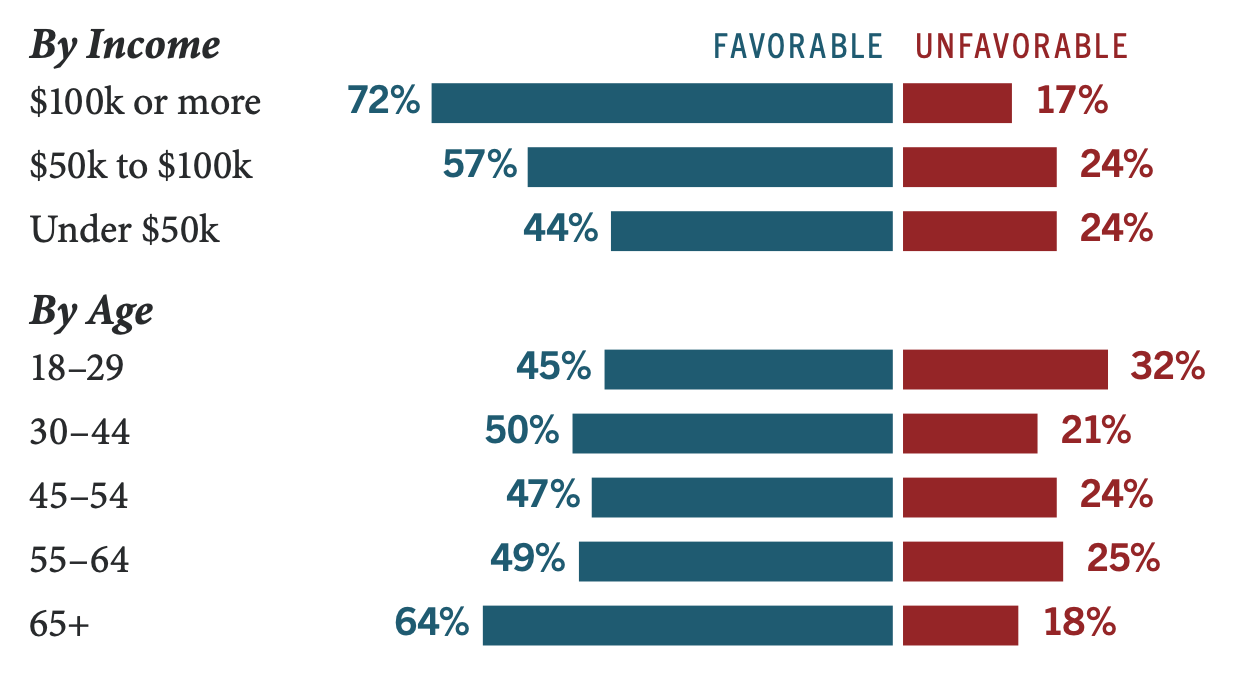
View of Socialism
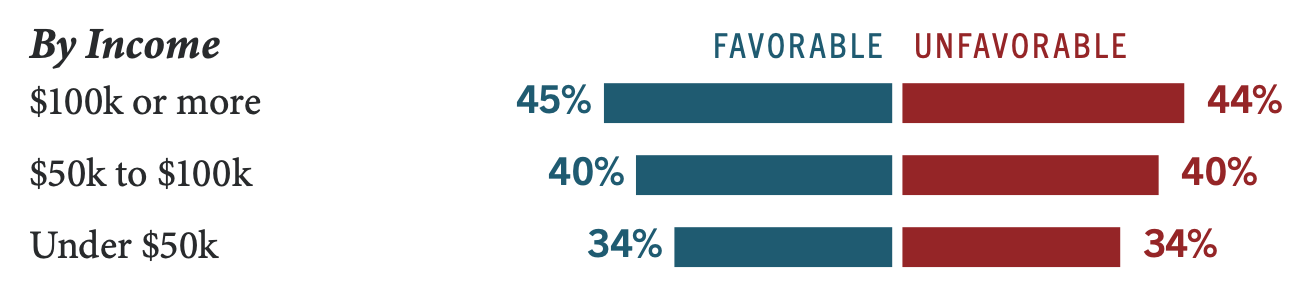
Editor’s note: The remaining respondents for each question (11%, 20%, and 32%, respectively) said they did not have enough information to say.
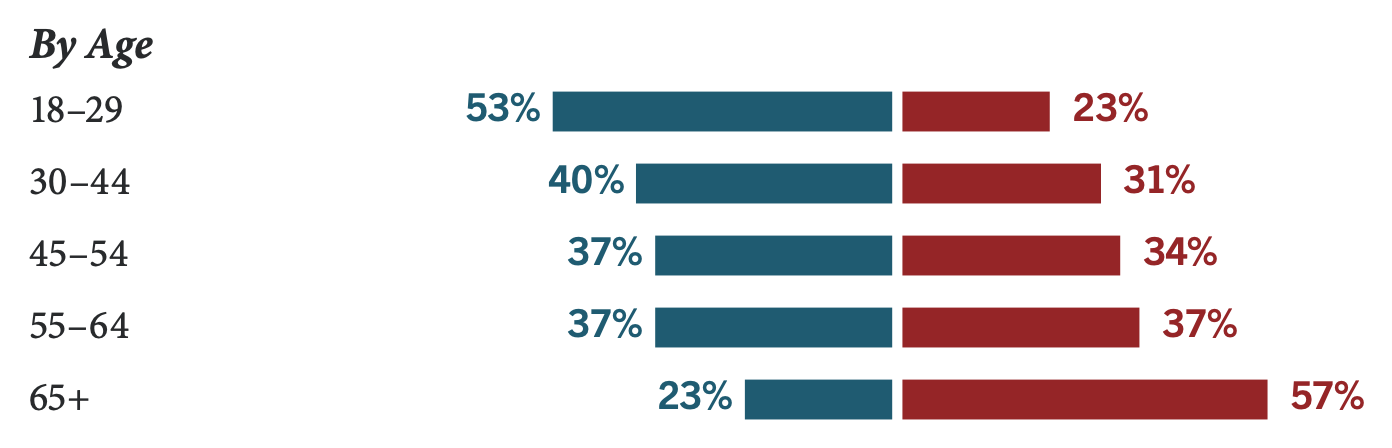
Editor’s note: Gen Z (ages 18-29) stands out with more who are supportive of socialism (53%) than capitalism (45%). Gen Z is also the only age group with a more favorable than unfavorable view of communism (38% favorable, 36% unfavorable).
The Cato survey found the Democratic Socialist label can both help and harm a candidate about equally, depending on the voter: 39% of Americans said they are more likely to vote for a presidential candidate described as a Democratic Socialist, 40% said they are less likely, and 22% said it would make no difference.
A majority of Democrats (61%) and roughly half of Gen Z respondents (51%) said they’d be more likely to vote for a candidate with the Democratic Socialist label. These numbers help illuminate recent wins by candidates using the Democratic Socialists of America label in Democratic primaries.
American Patriotism
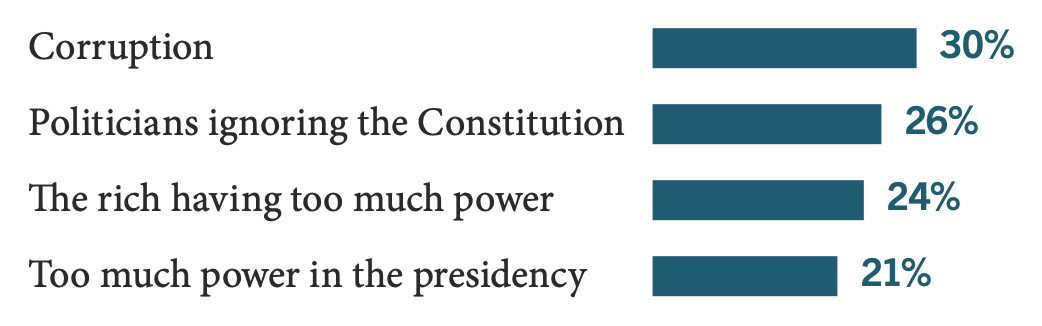
Large majorities of the public say they are grateful (86%) and proud (79%) to be Americans, but nearly 6 in 10 say they believe the country has moved away from founding principles. Corruption, concentrations and abuse of power, and ignoring founding principles are the top three things Americans believe could lead to the country’s demise.
More than 8 in 10 Americans say the US Constitution is important for protecting personal rights and freedoms, and more than half (56%) worry the US could stop being a free country within the next 50 years. Most (56%) say no president or political party should be trusted with too much power. However, nearly 4 in 10 also say it’s acceptable for a president they support to stretch the limits of the Constitution to achieve what they see as right.
Threats to the Republic
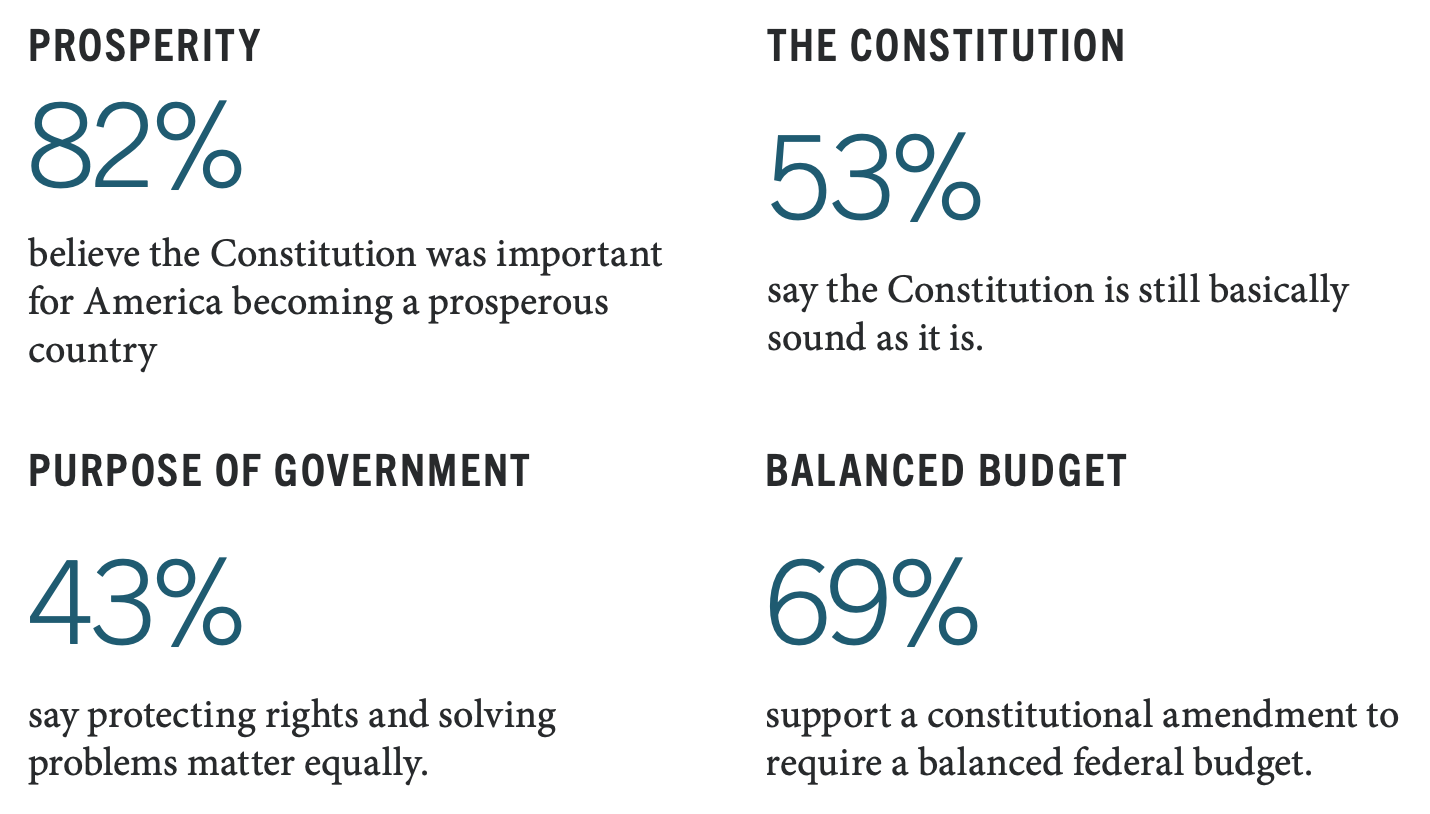
Most Americans (82%) believe the Constitution was important for America becoming a prosperous country. Thinking ahead to the next 50 years, respondents say the greatest threats to America remaining a free republic are (select up to three):
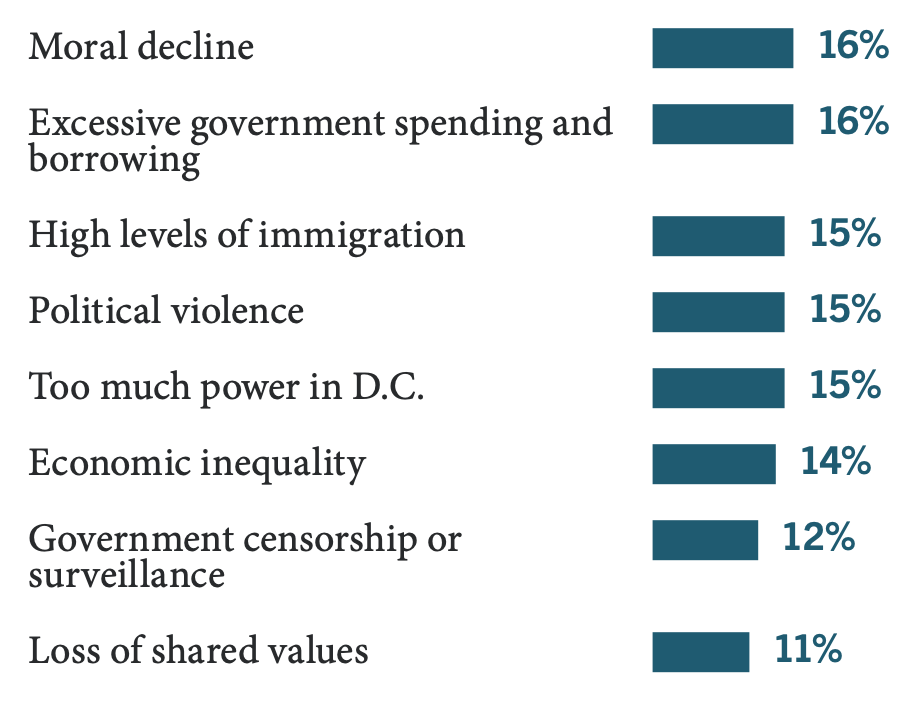
Americans believe other potential threats include:
Rights, Freedoms & the Constitution
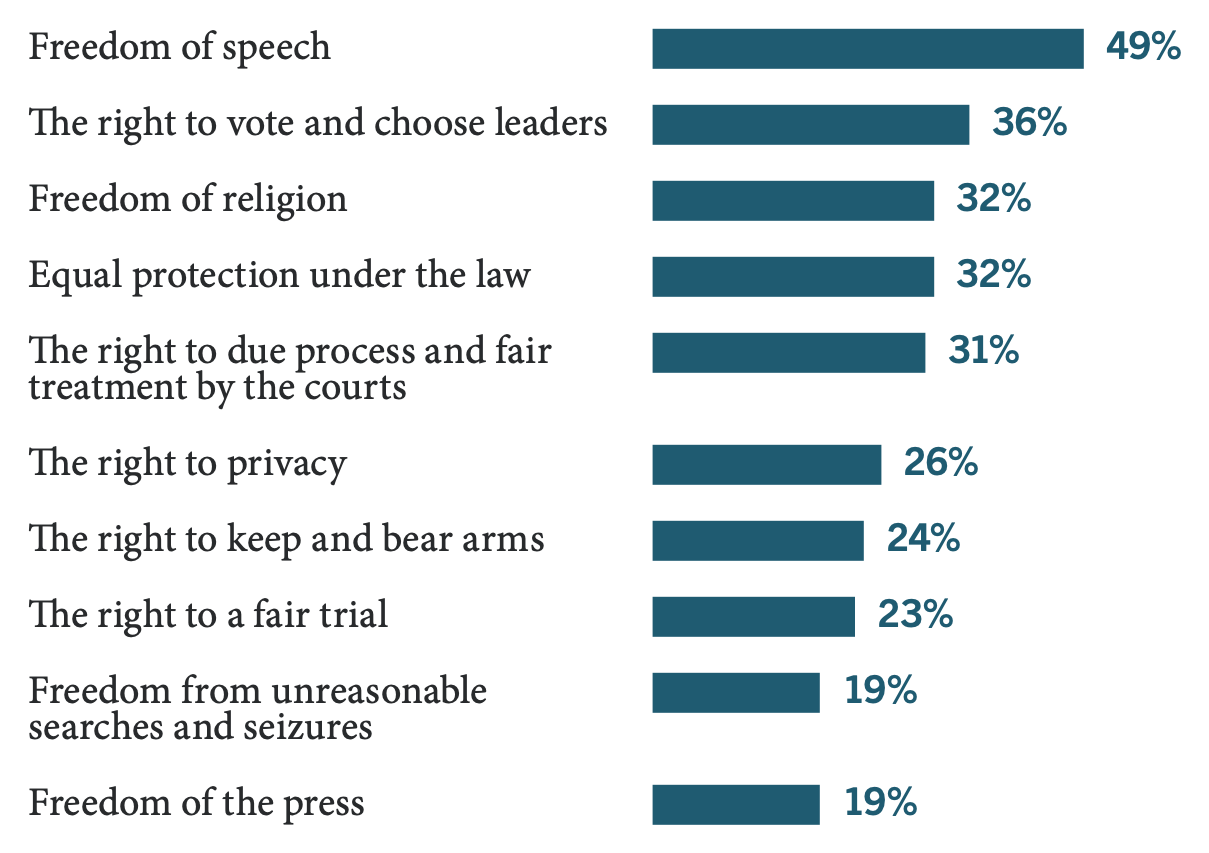
When it comes to the rights and freedoms that are most important to them personally, the American public holds the First Amendment most dear, followed by the right to vote, freedom of religion, and equal protection under the law. The top 10 slate of responses (respondents were asked to select up to 5 from a list of 18):
Amending the Constitution
More than half of Americans surveyed said they believe the Constitution is still basically sound as it is, while about one-third said they think it needs basic changes or amendments.

Government & Civics
When asked what would most help America succeed in the next 250 years, the most common responses were a lower cost of living and less special interest influence and government corruption (respondents were asked to select up to 3 from a list of 14).
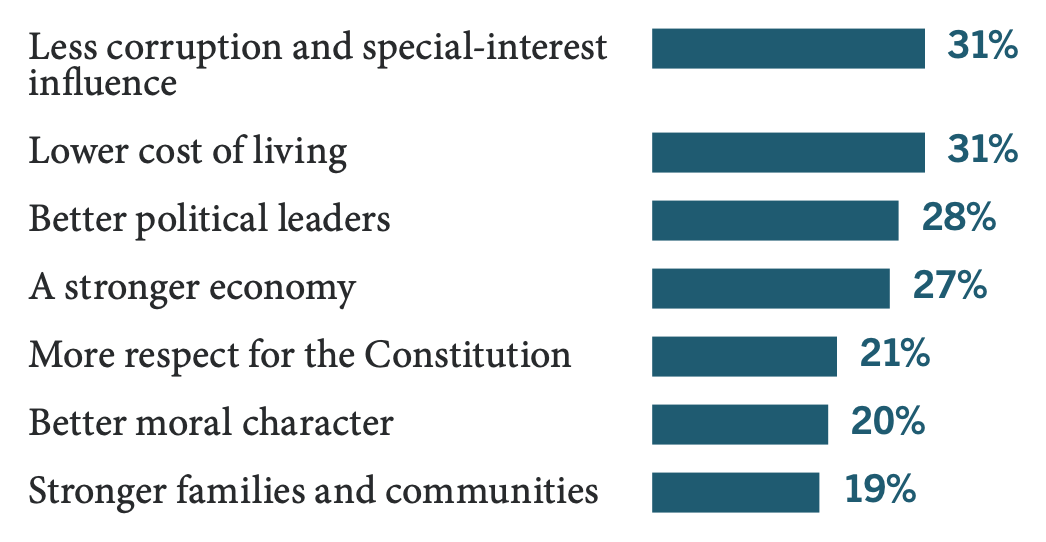
Could choose up to 3; top 7 of 14 shown
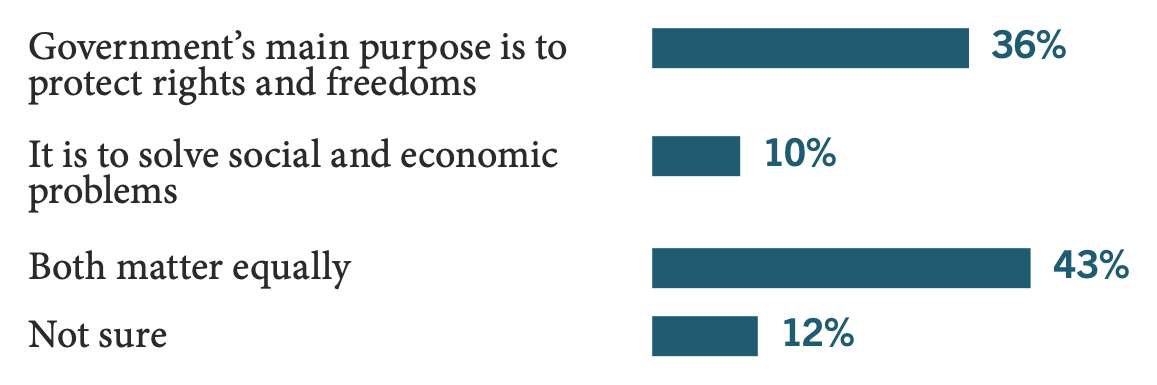
Proper Purpose of Government
Notably, when asked to choose between two core purposes of government, a plurality said both hold equivalent value.
Balanced Budget Amendment
When asked whether they would support or oppose a constitutional amendment to require a balanced federal budget, more than two-thirds were in favor.

Findings from the Cato Institute Fourth of July / America 250 Survey. Survey size and field dates: 2,253 adults from June 25–26, 2026. Margin of error ±2 points. Some figures are displayed rounded, so some totals may not add to 100%.
