

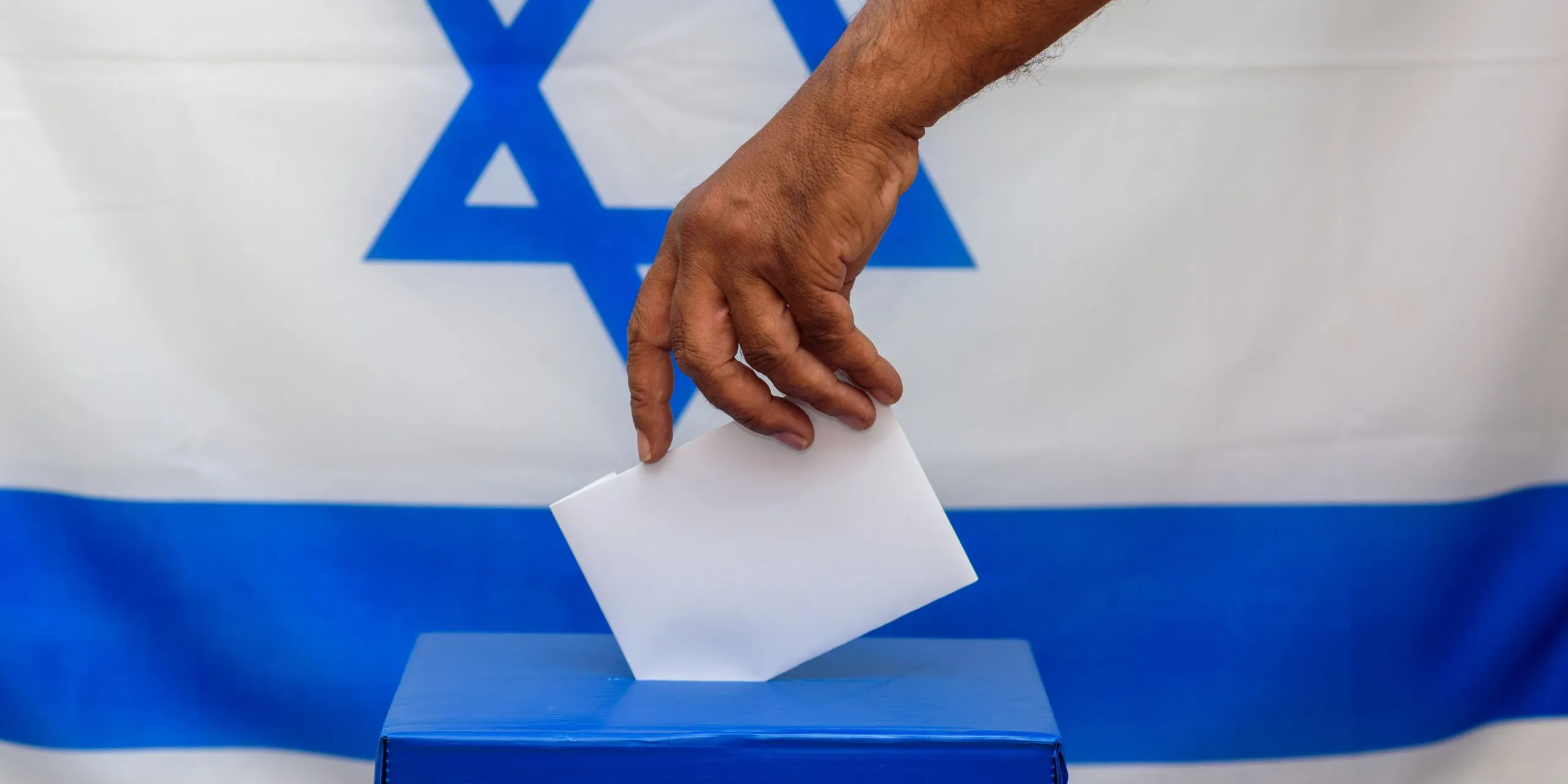
The votes have been counted and the results will be certified on November 4. The investigations into election fraud and vote-buying by foreign actors will continue, but the forces arrayed to undercut the government of Prime Minister Binyamin Netanyahu — principally the opposition parties and the leftist judiciary — have ensured the investigations will not be completed in time to forestall the seating of new Knesset members. As such, the Arab parties from the Joint List and Ra’am will hold an unprecedented 19 seats.
Seating a Knesset in which there are 19 Arab members is certainly a sign to the rest of the world that Israel is anything but an “apartheid state,” as critics in the west have claimed ad nauseum. The reality will lead to difficulties for the next prime minister when it comes to passing legislation. Two very complex biases are in place. The opposition bloc is opposed to nearly everything Netanyahu favors. The Anybody But Bibi MKs will actively work against his reform efforts. Meanwhile, the more dangerous bias comes from the Arab bloc. The Arab parties have refused to concede that Hamas is a terror organization and, generally speaking, do not support the State of Israel as an inherently Jewish state.
The responsibility for forming a government will now fall to retired General Gadi Eisenkot. Why will Eisenkot be asked before Netanyahu? It is anticipated that more parties will recommend to President Herzog that Eisenkot be given the first shot at forming a government – this includes Arab parties that will recommend Eisenkot to Herzog. The odds associated with Eisenkot successfully completing that task do not currently work in his favor. Both Netanyahu coalition members and Eisenkot coalition members have promised voters that they will not bring Arab list members into any coalition government.
In order to lead a majority coalition government, either Eisenkot or Netanyahu would need to muster 61 votes from coalition members. Post-election, Eisenkot’s coalition has 48 members, Netanyahu’s has 53, and the Arab bloc holds 19.
Eisenkot would have to woo members of Netanyahu’s coalition to join any anti-Netanyahu coalition he would hope to lead. Power is a tremendous temptress, and perhaps some in Netanyahu’s camp might stray — but would it be enough to put Eisenkot at or over the 61 votes he needs? This seems unlikely. Shas, the ultraorthodox Separdic party, has already said they will not leave Netanyahu’s coalition. The United Torah Judaism (UTJ) is the only party that has not yet committed to remaining with Netanyahu — and it would only add 7 seats, bringing Eisenkot’s math to 55. Not enough.
Here’s where election parlor games get interesting.
If Eisenkot were to break his pledge and look for ways to bring in members of the Arab bloc, could he attain the 61 seats needed to form a majority government? Unlikely. The math there doesn’t work. Even if all 19 elected Arabs joined Eisenkot’s coalition (which would be a complete breach of trust based on his commitment to voters not to have Arabs in his coalition), there is near certainty that Avigdor Liberman’s Yisrael Beiteinu party would leave the coalition. The loss of those 7 seats, even if other coalition members remained (also breaking their promises not to form a government with the Arab parties), would bring Eisenkot’s math to 60. Still not enough to form a government. All in all, it seems likely that Eisenkot’s efforts to form a government will not be successful.
If Eisenkot fails to form a governing coalition, Prime Minister Netanyahu will be asked to form a government. He will have several options. He can see whether one or more members of the failed Eisenkot coalition expresses willingness to jump ship and join his government. If they can bring enough seats (a minimum of 8 are needed), they may be invited to join the majority coalition. The likeliest candidate for a jump from Eisenkot to Netanyahu: Naftali Bennet, who would no doubt want a high level post in a Netanyahu government.
Another oft-discussed possibility is a unity government. This would be a power-sharing arrangement between the two largest blocs, the Netanyahu bloc and the Anybody But Bibi bloc. The description alone is enough to indicate the level of instability and government lethargy that would ensue, so a unity government seems unlikely.
The third option may be the most likely. If Bennet or others do not switch coalitions, Prime Minister Netanyahu will remain Prime Minister of a “caretaker” government and will call for new elections. This is the most favorable option for the current government. Netanyahu will remain in power, and a new election could see a new mix of seats allocated to each party.
If new elections are called, probably in the spring, Israel can put safeguards in place after it has fully investigated potential foreign funding and vote buying in Arab communities—providing relief from the limitations of strict adherence to election timeframes. It is therefore likely that Prime Minister Netanyahu has a strong preference for new elections.
Watch this space.
