

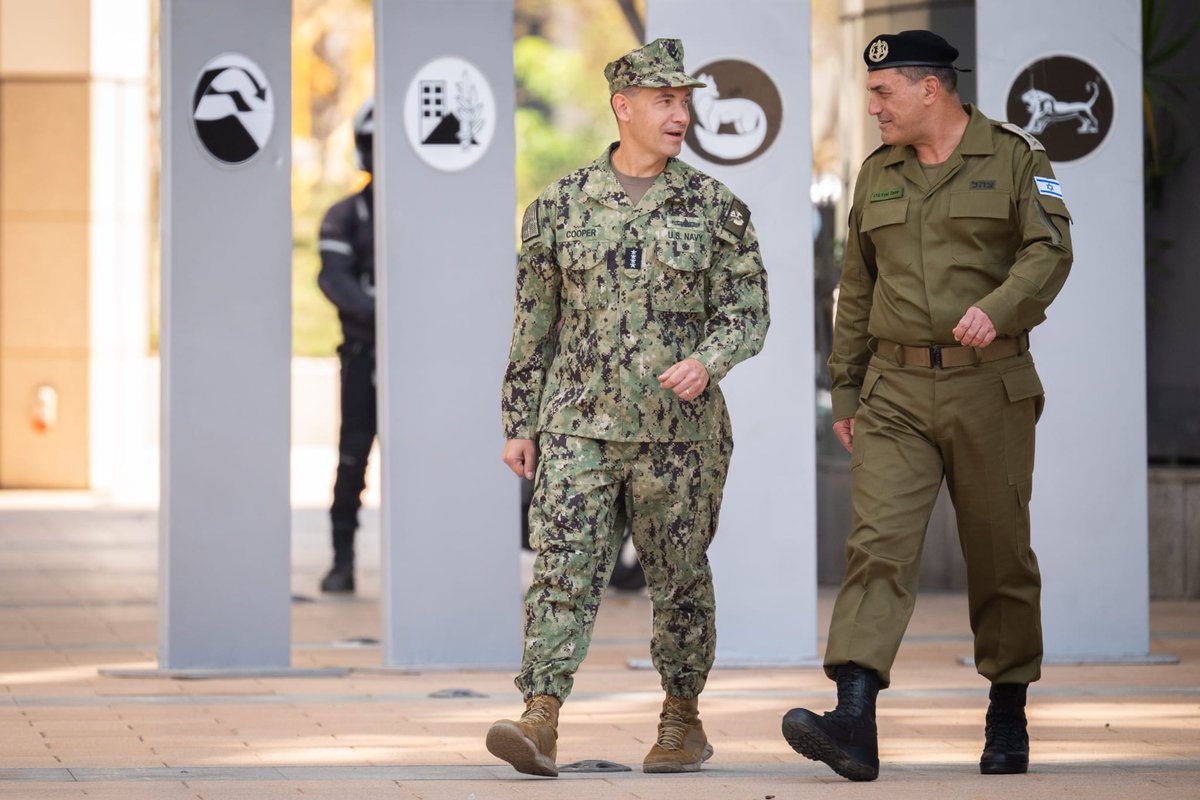
Editor’s note: We reprint the following analysis of US-Israel relations for two reasons. First, to honor the memory of its author, Shoshana Bryen, senior director of the Jewish Policy Center and editor of its flagship magazine inFOCUS since 2012, who died in July. Second, because Shoshana’s insight remains as valuable today as it did when the essay was published in 2019. The fraying of bipartisan support for close US-Israel ties to which she alluded has continued, to the benefit of enemies and adversaries of both countries. May her perceptive, articulate analysis serve as a reminder and warning — and recall for all of us Shoshana Bryen’s leadership in drawing and developing links between the essential big democracy and the essential small one. The article has been lightly edited to bring numbers, facts, and indisputable examples current, as we are certain Shoshana would have wanted.
One of the few points of unbounded bipartisan agreement in Washington has for decades been that US-Israel security cooperation is right, good, mutually beneficial, and worth every nickel spent on it. It is well-grounded in facts and acknowledged benefits to both sides. Today, however, support for Israel is becoming polarized. Even within the United States military, younger officers — and certainly cadets and midshipmen in the service academies — have been exposed to one or more of the following canards:
- That a close relationship with Israel precludes a close relationship with Arab states. This despite the clear shift in Gulf Arab states’ positions not only on Israel as a partner in addressing Iran, but also on Israel as a legitimate state in the region.
- That the United States is defending the State of Israel. This despite the fact that no American soldier has yet been dispatched to defend Israel, and despite the return of more than 75 percent of America’s security assistance funds through purchases in the United States — plus the results of Israel’s research and development. This percentage is set to rise.
- That Israel uses American security assistance to oppress hapless Palestinians. This despite the facts of security assistance cited above, and Israel’s clear need for border security.
The election of several pro-boycott members of the House of Representatives, and the retirement of several staunch supporters of Israel, are indications that misinformation will continue its malicious spread in Washington.
Where We’ve Been and Where We Are
The origins of US-Israel security cooperation are in the Cold War understanding that the United States could not engage all the adversaries of all its allies and friends around the world.
The first US-Israel Memorandum of Understanding (MOU) on military cooperation was signed in 1981, recognizing “the common bonds of friendship between the United States and Israel” and building “on the mutual security relationship that exists between the two nations.” It was embraced warily at first — the Americans were unconvinced they would receive anything of value, and the Israelis were concerned about continued freedom of action.
But, it worked. Israel went from being considered a net security consumer to a net security producer, meaning the United States did not have to expend resources to defend Israel; and Israel participated in making the Middle East and eastern Mediterranean regions more secure by its presence.
Today, the volatility of the Middle East is unlikely to be constrained. The United States, desirous of limiting its soldiers in the region even as it understands the risk attendant to a resurgent Russia and an increasingly desperate Iran, is as much in need of capable regional allies now as it ever was.
At the same time, Israel finds itself with new, positive relations in the Sunni Arab world, including a deeper relationship with the United Arab Emirates and Bahrain on some security matters. Political hostility in Europe has not yet manifested itself in a lowering of security cooperation. Israel’s place in NATO’s Mediterranean Dialogue appears secure.
The United States is Israel’s ally of first choice. And Israel remains the one country the United States can rely on to defend itself by itself and in coordination with American interests.
But Why?
The late Rabbi Lord Jonathan Sacks believed it has to do with the unique nature of our two societies, starting with the Jewish people’s demand of the prophet Samuel to have a king. God told Samuel to explain what having a king would mean, and if the Israelites still wanted one, to give them one. Rabbi Sacks:
What happened in the days of the Prophet Samuel is a social contract, exactly on the lines set out by Thomas Hobbes in “The Leviathan.” People are willing to give up certain of their rights, transfer them to a central power, a king, a government, who undertakes to ensure the rule of law internally and the defense of the realm externally.
In fact, One Samuel, Chapter Eight is the first recorded instance in all of history of a social contract.
But what makes the Hebrew Bible unique… and makes it completely different from Hobbes and Locke and Jean-Jacques Rousseau is that this wasn’t the first founding moment of Israel as a nation, as a political entity. That took place at Mount Sinai when the people made with God not a contract but a covenant. And those two things are often confused, but actually they’re quite different.
In a contract, two or more people come together to make an exchange… which is to the benefit of the self-interest of each.
A covenant isn’t like that. It’s more like a marriage than an exchange… A covenant isn’t about me, the voter, or me, the consumer, but about all of us together. Or in that lovely key phrase of American politics, it’s about “We, the people.”
Biblical Israel had a society long before it had a state… And there is only one nation known to me that had the same dual founding as biblical Israel, and that is the United States of America which has its social covenant in the Declaration of Independence in 1776 and its social contract in the Constitution in 1787.
Covenant is central to the Mayflower Compact of 1620. It is central to the speech of John Winthrop aboard the Arbella in 1630. It is presupposed in the most famous line of the Declaration of Independence… “We hold these truths to be self-evident, that all men are created equal and endowed by their Creator with certain inalienable rights.”
They are self-evident only to people who have internalized the Hebrew Bible.
End, Rabbi Sacks.
That is the center of America’s security relationship with Israel — the notion that our two countries have the same founding principles, the same respect for the social contract and the social covenant. I have taken more than 400 American security professionals — primarily retired American admirals and generals — to Israel in more than 30 trips. And at the other end of their careers, I have sent more than 500 cadets and midshipmen of our service academies to Israel before they received their commissions. I can say that they all understood the fundamental and profound principles that guide both the United States and Israel.
They don’t always agree with Israel’s politics — or Israel’s defense choices — or any other single aspect of Israeli political, military, and social life, but I never found one that didn’t believe in the relationship between Jews and the land of Israel, and between Israel and the United States.
The Practical Relationship
Starting there — and you have to start there — you quickly reach the practical aspects of the partnership. Those haven’t changed since 1979, when I first published a “quick reference guide” to security cooperation. Israel brings to the cooperation party:
- A secure location in a crucial part of the world
- A well-developed military infrastructure
- The ability to maintain, service, and repair US-origin equipment
- An excellent deep-water port in Haifa
- Modern air facilities
- A position close to sea-lanes and ability to project power over long distances
- A domestic air force larger than many in Western Europe and possessing more up-to-date hardware
- Multilingual capabilities, including facility in English, Arabic, French, Farsi and the languages of the (former) Soviet Union
- Combat familiarity with Soviet/Russian style tactics and equipment
- The ability to assist US naval fleets, including common equipment
- The ability to support American operations and to provide emergency air cover
- A democratic political system with a strong orientation to support the United States and the NATO system.
Added in 1996: Israel’s military R&D capabilities complement those of the US; its intelligence services cooperate closely with ours — to our benefit; and large numbers of American troops train in Israel.
Added in 2006: The establishment of police-to-police counterterrorism training in Israel. Can you imagine the American police learning tactics from Saudi Arabia, China, or Venezuela?
Added in 2016: Israel’s permanent diplomatic mission and security cooperation office established at NATO Headquarters in 2016.
Added in 2021: The formal incorporation of Israel into the US Central Command (CENTCOM) Area of Responsibility, operationalizing direct military coordination and integrated air/missile defense architectures alongside regional Arab partners and US forces.
The Practical Result
In 1967, in the 1970 War of Attrition, in 1973, and over Lebanon in 1982, Israel fought pro-Soviet forces and provided intelligence information and Russian equipment to the US. Most of the equipment had never been inspected close-up by American troops that then expected to face them in battle.
It was the aftermath of Israel’s Yom Kippur war that led to the American “combined arms doctrine” that was so successfully deployed in Operation Desert Shield/Desert Storm in 1990/1991.
In 1981, Israel’s bombing of the Iraqi nuclear reactor at Osirak meant the US knew it wouldn’t be facing a nuclear-armed Iraq in 1991.
After 9/11, Israel “opened the closets” for the US, supplying battle-tested experience in combating terrorism and urban warfare. Americans benefitted from Israel’s tactics against car bombs, IEDs and homicide bombing.
After the 2003 allied invasion of Iraq, American military personnel were being introduced to Israel’s bomb-sniffing dogs. The US wanted such dogs, but the training period is fairly long. The IDF was willing to make Israeli dogs available, but they only took commands in Hebrew. It was quicker to train the Marines than retrain the dogs, making some interesting scenes in Baghdad.
In September 2007, the IAF destroyed a Syrian-North Korean nuclear plant, extending the US’s strategic arm and providing vital information on Russian air defense systems, which are also employed by Iran.
In 2017: Israeli cyber-intelligence operators hacked an ISIS bomb-maker cell in northern Syria, discovering that the terror group had engineered compact explosives designed to fit invisibly inside commercial laptop battery compartments in order to bypass airport X-ray machines. Israel immediately passed this actionable intelligence to US counterterrorism officials. The Department of Homeland Security and Transportation Security Administration (TSA) immediately changed the rules related to large electronics in cabin luggage on inbound flights.
In January 2018: Mossad operatives breached a heavily guarded industrial warehouse in southern Tehran, cutting open dozens of safes in under seven hours to extract half a ton of original Iranian government documents and electronic files. Transferred directly to US and allied intelligence agencies, this primary-source trove mapped previously unknown underground nuclear facilities, warhead design blueprints, and illicit procurement networks. It provided the United States, NATO allies, and the International Atomic Energy Agency (IAEA) with actionable site coordinates to inspect undeclared nuclear locations.
In Today’s World
Not a single American serviceperson needs to be stationed in Israel. Aside from training missions, there have been a few hundred American soldiers stationed in Israel since 2009, working with the US-Israeli co-designed X-band radar system — a deployment that helps the US and Israel monitor air threats from the east.
And, as a reminder, Israel’s missile defense capabilities — developed and produced in conjunction with American industry — not only protect Israel from Hamas and Hezbollah missiles, but protect the United States from emerging threats from North Korea and Iran. Various branches of the US military have purchased a variety of Israeli-developed systems and participated in joint development of anti-tunnel defenses, the Arrow Missile Program, the F-35 Joint Strike Fighter Plane, THEL Laser Program, the Advanced Urban Combat Training Facility as well as Iron Dome.
After the 2014 Gaza War, during which Israel was roundly criticized by the American administration for allegedly not taking proper precautions to limit Palestinian civilian casualties, the Chairman of the Joint Chiefs of Staff, Gen. Martin Dempsey said:
Israel… did some extraordinary things to try to limit civilian casualties, to include… making it known that they were going to destroy a particular structure. The IDF is not interested in creating civilian casualties. They’re interested in stopping the shooting of rockets and missiles out of the Gaza Strip and into Israel.
General Dempsey surprised his audience — the Carnegie Council for Ethics in International Affairs — by telling them he had already sent an American delegation to Israel to learn lessons from the IDF, “including,” he said, “the measures they took to prevent civilian casualties.”
Israel has been a partner in US and multi-lateral military exercises for years — interestingly, long before anyone might have imagined, there was an exercise in which Israel and the UAE flew together, signaling a change in Israel’s relations with Persian Gulf countries.
In late 2018, Israel hosted the largest aerial training exercise in its history — Blue Flag, in the Negev Desert. Seventy foreign aircraft from around the world and hundreds of pilots and air support team members took part. Participants included the United States, France, Italy, Greece, Poland, Germany, and India. It was the first time French, German, and Indian contingents trained in Israel.
And if you thought you would ever see the Luftwaffe flying in Israel, you have a better imagination than I do.
Reciprocally, Israel participated in 2019 in US-EUCOM’s Spirit X exercise in Germany with nearly 4,400 American and European troops.
In November 2021, Israeli naval forces joined the navies of the United Arab Emirates and Bahrain aboard the amphibious transport dock USS Portland in the northern Red Sea. It was the first time in history the two Gulf states publicly conducted military operations alongside Israel. Focusing on Visit, Board, Search, and Seizure (VBSS) tactics and maritime interdiction, the drill operationalized joint defense of commercial transit corridors connecting the Suez Canal and the Bab el-Mandeb Strait. This paved the way for Israel’s February 2022 participation in IMX 2022, training across the Middle East alongside 60 partner nations — including Saudi Arabia and Oman.
Conclusion
Israel and the United States are drawn together by common values and common threats to our well-being. The bipartisan support of our ally Israel is a testament to those values as well as to the practical recognition that the threats require cooperation in intelligence, technology, and security policy.
We have that with Israel. But more than that, the United States and Israel share an intimate understanding of nationhood. The British — our other best friends in the world — can’t say that rights are inalienable and come from The Creator. For the British, rights came from the earthly King or Queen, and only those rights the sovereign chose to give — which is why we had a Revolution.
Shoshana Bryen z”l was the Senior Director of The Jewish Policy Center from 2012 to 2026 and Editor of inFOCUS Quarterly. Research and editing provided by interim inFOCUS Editor Elizabeth Thompson.
