

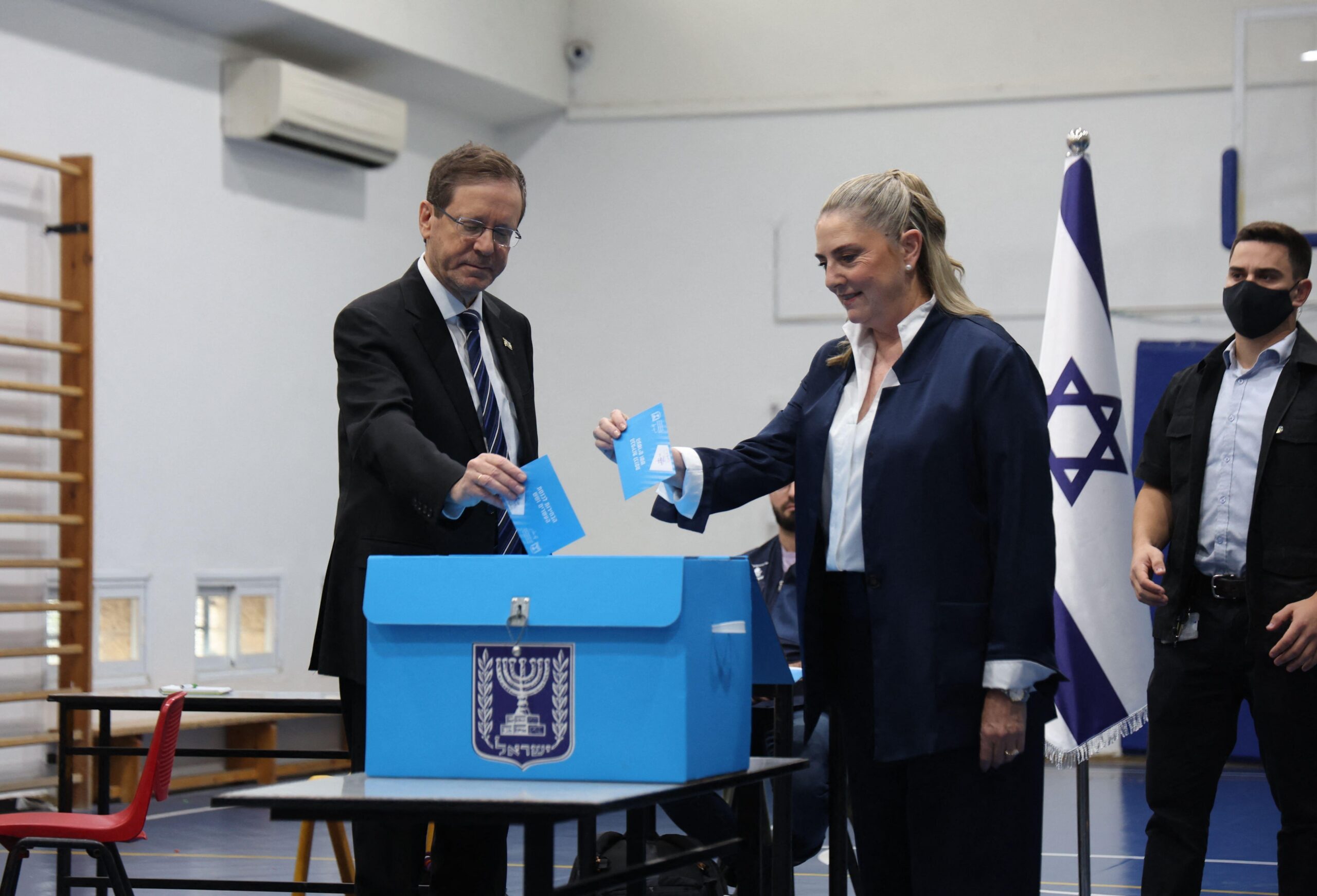
Israeli voters turned out in record numbers to cast their ballots in the nation’s first election since the October 7, 2023 massacre. Historic, too, was the number of Israeli Arab citizens who voted. Upwards of 75% of eligible Arab voters cast ballots. And although the polling information is not final — and likely will not be until Friday or later — one thing is clear: The Arab citizens of Israel have made an enormous impact on the election outcome. No, they will not earn a majority of the vote. But Israeli Arabs, who make up approximately 20% of Israel’s population, may win enough seats in the future Knesset to influence the formation of a new government, or they may be able to delay the formation of a government which would, in turn, make further Israeli action against Hamas or Iran somewhat more difficult.
Another thing that is clear from the elections and voting is that Israelis care deeply about the future direction of their country. This election will determine what Israel’s future looks like. Most Israelis went to sleep last night feeling anxious about the election results. Support for Benjamin Netanyahu and a Likud-led government certainly means a strong hand at the tiller and the continuation of policies that have kept Israel and Israelis secure since the devastating Palestinian terrorist attacks of October 7. But is the reality of a more secure country enough to fend off the will of those whose vote amounted to an ABB vote? ABB, or Anyone But Bibi, voters backed opposition leader Gadi Eisenkot and other members of the opposition bloc. As Eisenkot is a retired Army Chief of Staff and former General with no experience in government, a vote for the opposition wasn’t so much a vote for something as it was a referendum on Netanyahu.
There are a few very important points to highlight as they relate to the elections, the current government, and Prime Minister Netanyahu specifically:
- Polls always underestimate Netanyahu. He went into the election with media polls (other than the poll conducted by Channel 14, the more right-leaning channel) all but assuring an Eisenkot victory, or at least a plurality large enough to be asked to form a government. Netanyahu is clearly the most talented politician in Israel’s history. This is his seventh election. In each election, he has defied the polls predicting his loss and come from behind. This tells us two things. First, Israeli pollsters are highly unreliable, bordering on propagandist. And second, the Israeli public is not all that influenced by Israel’s leftist-dominated media.
- There are two sources of instability that have hampered Israel for the past seven years: First, the legal system’s lawfare against the Prime Minister that brought about an absurdly concocted and corrupt indictment and trial; and second, the left’s exploitation of lawfare to justify boycotting Netanyahu and the right. Netanyahu has been on a show trial for the past five years. But during the past three weeks of testimony from former Attorney General Avichai Mandelblit, the corruption of the prosecution has been on full display. The question now is whether the left will abandon its boycott of Netanyahu, not whether it will hamper his reelection hopes. The public has been shown that there are malign leaders from the left, going back many years, who have poured tremendous state and private resources into efforts to discredit Netanyahu. Yet he remains the most popular leader in the country by far.
- Finally, the Arab vote. As noted above, Arabs turned out to vote in record numbers. The Arab rise may have made it impossible for either the Netanyahu/Likud bloc or Eisenkot’s opposition bloc to reach a 61 seat majority. Both Arab parties reject Israel’s right to exist as a Jewish state, and both refuse to state that Hamas is a terrorist organization. During the course of the voting yesterday, poll watchers reported that the Ra’am party, the Muslim Brotherhood’s party, was paying voters with gas cards distributed at polling stations, with cash cards, and with cash. They were buying votes — Chicago-style. This is supposed to be investigated by the police before the final results are submitted next week. It could significantly shift the balance of results.
When all is said and done, Benjamin Netanyahu should never be counted out. He remains a uniquely Israeli combination of America’s “comeback kid” and Britain’s Winston Churchill. There has never been an Israeli leader like him. He has not yet won reelection, and he may not be able to pull a rabbit out of the hat this time, but he will not cede any election until the votes are all counted and the fraud is accounted for. Watch this space.
